What is Bullying?
Bullying is when someone intentionally does or says something to hurt another person. This behaviour is often repetitive and deliberate. Bullying can take many forms such as:
- Physical Bullying – Hitting, slapping, shoving, tripping, spitting, throwing objects, blocking someone’s path; damaging, stealing, or withholding someone’s property
- Verbal Bullying – Insults, teasing, racist remarks, threats, hurtful jokes
- Social Bullying – Excluding someone from an activity or group, ignoring someone, talking about someone negatively behind their back, or spreading rumours
- Cyberbullying – Using technology such as cell phones and the internet to blackmail, threaten, intimidate, insult, spread rumours, post private/humiliating images or videos
Recognize the Signs
Warning signs that someone is being bullied can include:
- Withdrawal from activities
- Unexplained injuries
- Difficulty concentrating
- Signs of depression or anxiety
- Skipping school
- Using substances (alcohol and/or drugs)
- Aggressive and/or violent behaviour
- Eating disorder symptoms/development
- Negative thoughts and self talk
- Mental – someone may be feeling upset, embarrassed, stupid, irritable, guilty, judged, lonely, untrusting, overwhelmed, nervous, anxious, afraid, or angry
- Emotional – feeling ashamed or losing interest in the things you love
- Physical – pain, decreased appetite, difficulty sleeping, stomach ache, headache
How can I support a friend who is being bullied?
- Remind them that you’re there for them and you want to help
- Be kind
- Help them think through what they might say and to whom
- Offer to go with them if they decide to report
If your friend still does not want to report the incident, support them in finding a trusted adult who can help them deal with the situation. Remember that in certain situations, the consequences of bullying can be life threatening.

-
Always let your parents know where you are going and when you will be home
-
Walk with a buddy or group of friends
-
Know your neighbourhood and safe places to go if you need help
-
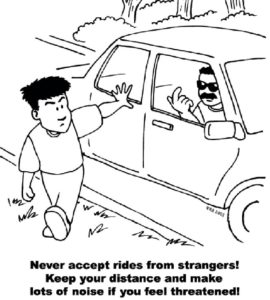
Stay away from cars occupied by strangers. Do not approach a vehicle even if the occupant asks for help or directions.
-
Never flash money, bus passes, cell phones, cameras, or other possessions. Don’t tell people what you have in your locker.